Hey there, fellow creators and design enthusiasts—it. If you're anything like me, you're always on the hunt for tools that make visual work faster and more intuitive without sacrificing quality. Enter AI image design agents, the smart, autonomous helpers that are quietly reshaping how we handle everything from logos to full-blown campaigns. These aren't just generators; they're like digital collaborators that understand your vision, tweak details on the fly, and deliver polished results that feel handcrafted. I've spent time digging through AgentHunt.io, a goldmine for spotting emerging AI talent, and pulled together the top 5 AI image design agents based on real user buzz, feature depth, and how well they tackle image-specific challenges. We're talking ChatGPT AI, Manus AI, Lovart AI, E2B AI, and MiniMax Agent—each one shining in its own way for tasks like editing, prototyping, and branding. This guide isn't just a list; it's my take on why these stand out in 2025, complete with practical insights to help you decide which fits your flow. Whether you're freelancing, running a startup, or leading a marketing team, let's break it down and get you inspired.
The Rise of AI Image Design Agents: What Makes Them Indispensable Right Now
Picture this: You're knee-deep in a project, scrambling to visualize concepts, and traditional software feels like a slog. That's where AI image design agents come in—they're built on cutting-edge models that not only create images but also reason through steps, adapt to feedback, and integrate seamlessly into your toolkit. In 2025, with AI adoption in design hitting new highs (think billions in market value), these agents are saving pros hours on repetitive tasks while sparking fresh ideas. From my experience reviewing dozens of tools, the real winners excel in autonomy, precision, and versatility. They handle everything from quick sketches to complex edits, all while keeping your brand's vibe intact. Benefits? Massive time savings, cost cuts on hiring out, and endless experimentation without burnout. But not all are created equal—I've focused on AgentHunt.io's standouts for their proven track record in image work. Ready to see why these five are the best AI image design agents circulating right now?
1. ChatGPT AI: The Smart Automator for Complex Tasks and Real-World
ChatGPT AI Agent is an advanced conversational AI assistant developed by OpenAI. Powered by a large language model, it understands context and generates human-like responses across a wide range of prompts and questions. Designed to excel in natural, nuanced conversations, it supports both personal and professional use cases, from answering queries to creative content generation.
Key Features:
- Sophisticated natural language understanding
- Context-aware response generation
- Ability to summarize, explain, and generate creative text
- Supports interactive, dynamic conversations
Use Cases:
ChatGPT AI Agent helps businesses automate customer support by answering common questions quickly and escalating complex issues to humans. It improves customer satisfaction and saves time for support teams. It’s used in industries like retail, finance, and healthcare for seamless, 24/7 assistance. In marketing, it helps create content like emails, blog posts, and social media updates, making it easier and faster for teams to run campaigns. It can also qualify leads by analyzing customer needs and personalizing messages. This helps sales teams focus on the best prospects.
Why It’s One of the Best:
ChatGPT AI Agent stands out for its advanced architecture and comprehensive training by OpenAI, enabling highly coherent and contextually relevant interactions. Its conversational expertise and adaptability make it a versatile tool across domains and industries.
Best For:
ChatGPT AI Agent is best for companies that need reliable, always-available customer service. It excels in high-demand environments that require fast, personalized support any time of day, which is ideal for global businesses and e-commerce platforms. Marketing teams and content creators benefit from ChatGPT’s ability to generate engaging, high-quality written material quickly. It helps them maintain consistent messaging and scale their content output efficiently.
2. Manus AI: The All-Around Powerhouse for Dynamic Image Automation
Manus AI feels like that reliable sidekick who anticipates your needs—it's a general-purpose agent that's mastered turning vague ideas into sharp, actionable visuals. Launched with a bang earlier this year, it leverages multi-model smarts to dive into image editing and generation like a pro.
Key Features:
- Blends models like Claude 3.5 and Qwen for seamless image tweaks, from background swaps to style overhauls.
- Wide Research mode spins up parallel agents for bulk visual synthesis and data-driven designs.
- Secure code handling lets you run custom scripts for precise image manipulations, all in a safe sandbox.
- 24/7 autonomy for enhancements, ensuring your visuals evolve without constant oversight.
Use Cases:
I've seen Manus shine in marketing audits where it analyzes performance data to redesign ad images for better engagement—think optimizing landing pages by A/B testing visual elements like color schemes or layouts. In e-commerce, it sources supplier visuals and generates product mockups on the fly, while for research-heavy projects, it compiles stock analyses into infographics or predicts trends with illustrated reports. Businesses use it for SEO-boosting image optimizations, like creating alt-text-friendly thumbnails, and even personal tasks like curating travel itineraries with custom maps and photo edits. One standout example? Automating social media opinion mining to refresh brand visuals based on real-time feedback, turning raw data into compelling, shareable graphics.
Why It's One of the Best:
Clocking in at 17.3 million monthly users, Manus isn't just popular—it's transformative, especially with 2025's GPT-5 upgrades that amp up its visual reasoning. Users rave about how it handles tedious stuff like zipping reference images for documents or building strategy visuals from complex analyses, making it a staple for pros who want reliability without the hassle.
Best For:
Marketing teams juggling data-driven campaigns, developers prototyping visual apps, or analysts needing illustrated reports—anyone who values deep automation in high-stakes image work where accuracy and speed can make or break a project.
3. Lovart AI: The Collaborative Dream Team for Multimedia Masterpieces
If Lovart AI were a person, it'd be the creative director who never sleeps—it's the world's first true design agent, orchestrating everything from static images to dynamic videos and 3D renders. Since its global rollout, it's been a hit for those craving agency-level output without the agency price tag.
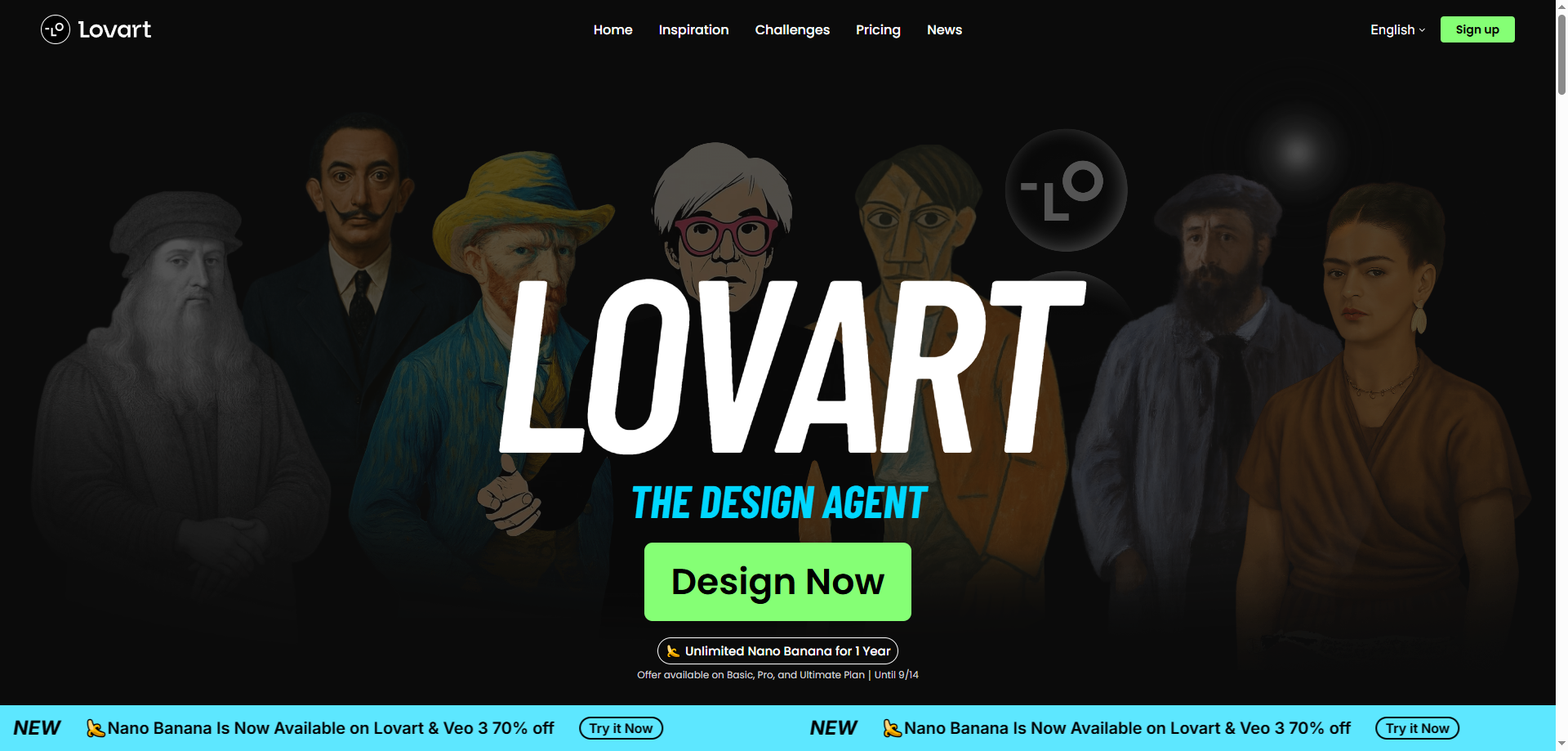
Key Features:
- ChatCanvas for interactive co-creation, where you sketch notes and it refines into full visuals.
- Auto-design tech handles storyboards and brand kits, with built-in upscalers for crisp, high-res images.
- Integrates ChatGPT and Runway for multi-format magic, including secondary edits like blurring or enlarging.
- Community-driven templates keep things fresh, from cyberpunk anime to polished luxury ads.
Use Cases:
Lovart really flexes in big-scale projects, like crafting global ad campaigns where it generates cohesive image sets for billboards, social posts, and web banners—ensuring brand consistency across platforms. For social media creators, it whips up trend-aligned visuals, such as cottagecore-themed character illustrations or cyberpunk edits that go viral overnight. In film and e-learning, it's gold for storyboarding sequences, turning script prompts into illustrated timelines complete with mood boards and asset variations. E-commerce pros love it for product mockups in virtual try-on scenarios, while agencies use it to prototype websites with hero images that boost conversions. A real-world win? Building entire landing pages with optimized visuals that factor in mobile responsiveness and SEO, all from a single prompt.
Why It's One of the Best:
Its May 2025 launch sparked a user explosion thanks to features that mimic a full design team—think scalable workflows that cut costs by 90% for under $90/month. Reviews highlight how it ignites creativity without the usual roadblocks, making it a 2025 must-have for seamless human-AI teamwork.
Best For:
Agencies and multimedia creators tackling expansive projects like ad series or branded content ecosystems, where collaboration, scalability, and multi-format support turn solo efforts into professional-grade outputs that rival big studios.
4. E2B AI: The Secure Backbone for Enterprise-Grade Image Processing
E2B AI is like the unsung hero of the AI world—it's the cloud infrastructure that lets agents run wild with image tasks in a bulletproof environment. In 2025, it's powering 88% of Fortune 100 companies with its sandboxed setups for visual workflows.
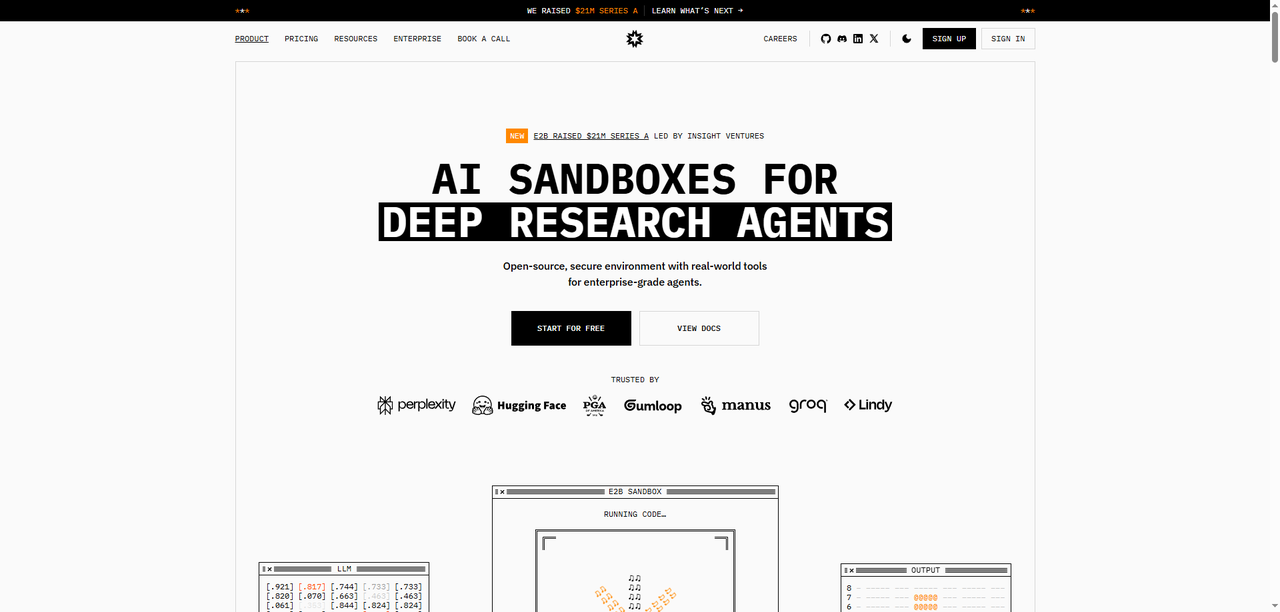
Key Features:
- Secure sandboxes for executing untrusted code in image gen and analysis, with high-scale processing.
- Supports libraries for reinforcement learning on visuals, like training models for style transfers.
- Agentic tools for data viz, turning raw datasets into interactive image prototypes.
- Custom environments for AI apps, ensuring safe, efficient image manipulation at enterprise levels.
Use Cases:
Enterprises lean on E2B for secure prototyping of image-heavy apps, such as running code to generate and test UI elements in virtual sandboxes without risking main systems—think Hugging Face using it for RL on generative art models. In research, it facilitates deep dives into visual data, like analyzing medical images or creating dashboards from satellite photos. For developers, it's clutch in building AI agents that process batch edits for e-commerce catalogs, optimizing thousands of product shots while maintaining compliance. A prime example is its role in frontier workflows, where teams simulate real-world scenarios like AR filters by executing code for dynamic image overlays, all in isolated environments that prevent breaches.
Why It's One of the Best:
Its focus on security and scale—handling everything from code interpretation to virtual computers—makes it indispensable for big-league ops. With integrations like Manus relying on it for agent autonomy, E2B's 2025 edge in safe, high-volume image tasks sets it apart.
Best For:
Large enterprises and tech teams dealing with sensitive visual data or complex simulations, such as in AI research labs or compliance-heavy sectors like finance and healthcare, where robust infrastructure ensures innovation without the risks.
5. MiniMax Agent: The No-Code Wizard for Building Visual Products from Scratch
MiniMax Agent is the ultimate "idea-to-reality" machine—a super-agent that codes, designs, and deploys image-centric products with zero hassle. It's blowing minds in 2025 with its multimodal prowess.
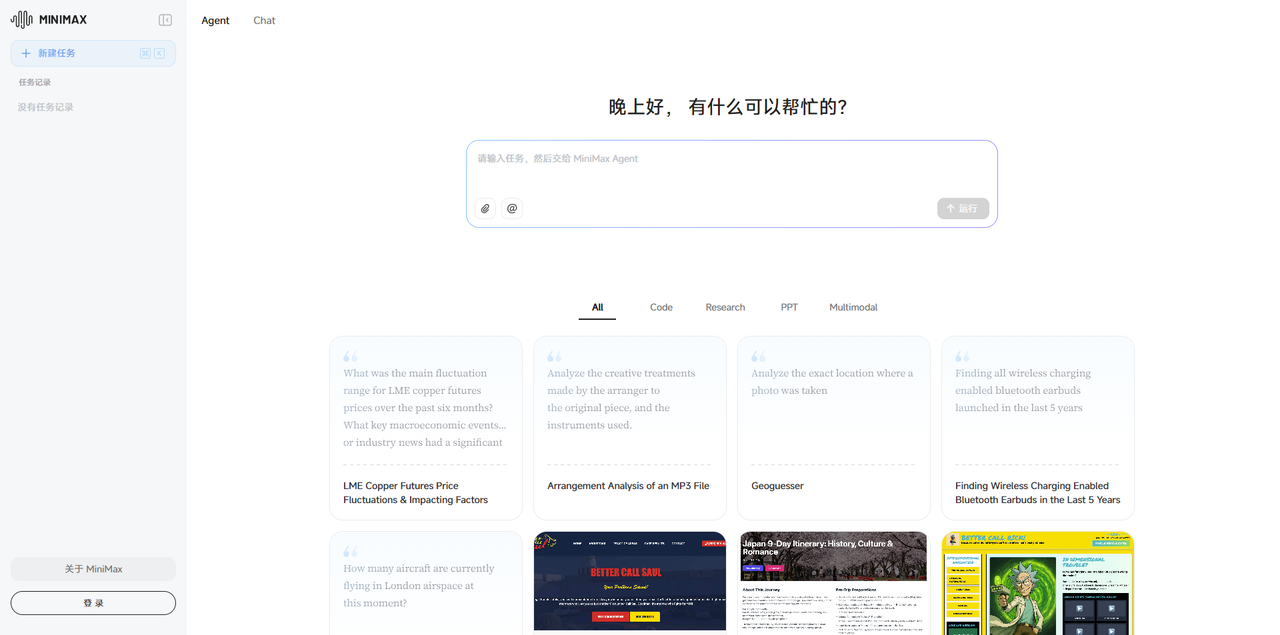
Key Features:
- Autonomous planning from prompts, handling text-to-image alongside code gen for full apps.
- Multimodal inputs (audio, video, docs) for enriched visual outputs, like video-enhanced graphics.
- Agent and Chat Modes for iterative refinements, with function calling for external tools.
- No-code platform for quick builds, including MCP for multi-agent collaboration.
Use Cases:
Non-coders adore it for spinning up full-stack apps with embedded visuals, like a Spotify clone featuring custom album art generators or interactive playlists with image carousels. In content creation, it crafts presentations from research notes, embedding dynamic infographics and video thumbnails. For e-learning, it builds courses with illustrated modules, pulling from videos to create annotated diagrams. Businesses use it for rapid website prototyping, generating hero images and layouts from audio briefs, while developers leverage its beta agent for testing multimodal tasks like image-audio sync in apps. One exciting application? The $150K challenge where users built smarter agents for visual risk assessment in finance, turning data into deployable dashboards.
Why It's One of the Best:
With 148.7 thousand users and features like insane no-code builds (apps in under an hour), MiniMax is hailed as a Swiss Army knife for Chinese AI innovation, excelling in structured outputs and multi-agent systems.
Best For:
Entrepreneurs and creators without coding chops who need to prototype and launch visual-heavy products quickly, such as indie developers making apps or marketers deploying campaign sites, especially in fast-paced environments demanding multimodal integration.
Picking Your Perfect AI Image Design Agent: A Quick Decision Guide
Navigating the best AI image design agents boils down to your project's scale and style. If you're all about automation and research visuals, Manus or MiniMax might be your match. For creative heavy-lifting, Lovart's collaboration edge wins out. Security-first? E2B has you covered. And for branding basics, ChatGPT AI delivers without overcomplicating things. Test free tiers on AgentHunt.io to see what clicks—most integrate easily with your existing stack.
Looking Ahead: The Evolving World of AI Image Design Agents
As we hit mid-2025, these agents are just getting started, with trends pointing toward even smarter multi-agent teams and AR tie-ins. They're not replacing human touch—they're amplifying it, letting us dream bigger. Keep an eye on AgentHunt.io for the next wave. What about you? Which of these best AI image design agents are you eyeing for your next project? Drop a comment below—I'd love to hear your stories or swap tips!
FAQs:
What exactly is an AI image design agent, and how does it differ from a regular AI image generator?
An AI image design agent is more than just a tool that spits out pictures from a prompt—it's an autonomous system that thinks like a designer, handling multi-step processes like planning layouts, iterating on feedback, and ensuring consistency across a series of visuals.
How do I choose the best AI image design agent for my specific needs, like branding or e-commerce?
Start by assessing your workflow: If branding is key, go for something specialized like Sketch Logo AI for quick, editable logos that scale to 3D or NFTs. For e-commerce, Lovart AI's multi-format support shines in creating product mockups and campaign visuals that boost conversions.
What are the potential limitations of AI image design agents, and how can I overcome them?
No tool is perfect—common hiccups include occasional distortions in details like hands (a classic AI quirk) or struggles with hyper-specific cultural nuances.